Parameters
Various parameters are used in order to describe in silico cardiac safety profile of compounds:
Action potential duration (APD) and triangulation (T)
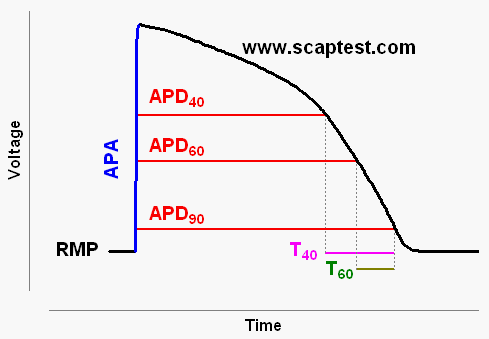
APD is calculated at 40, 60 or 90 % (APD40, APD60 or APD 90) of the action potential amplitude (APA)
T40 is calculated as the APD90 - APD40
T60 is calculated as the APD90 - APD60
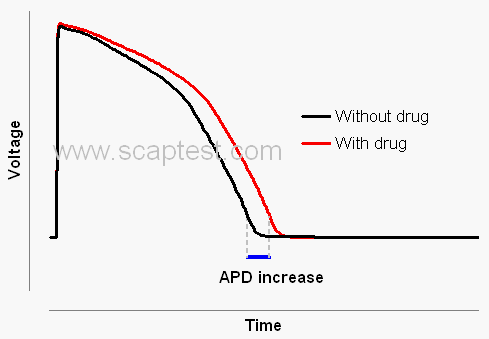
Action potential duration increase or decrease (APD)
APD is calculated as APD90 in presence of compound - APD 90 in absence of compound, for example
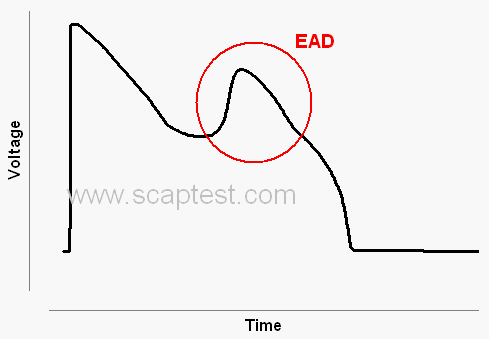
Early afterdepolarization
EAD is defined as a increase of the membrane voltage during the AP phase 2
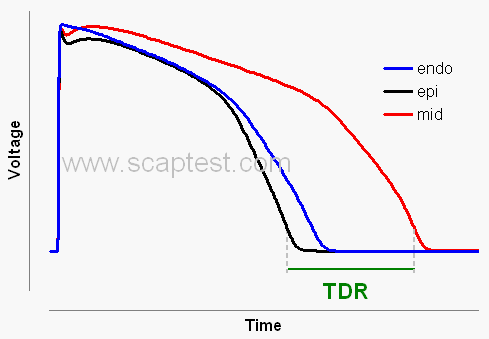
Transmural dispersion of repolarization (TDR)
TDR is calculated as the difference between APD90 measured on midmyocardial myocyte and APD90 measured with epicardial myocyte
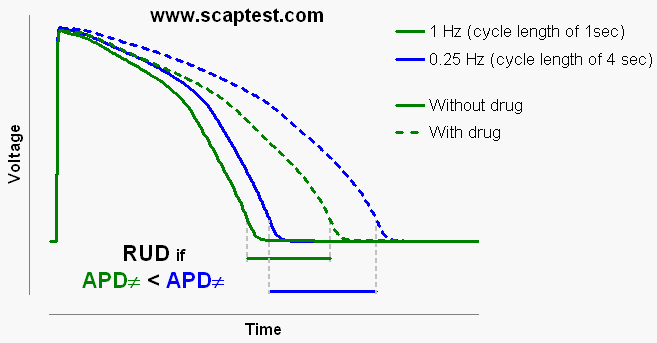
Reverse use dependence (RUD)
Prolongation of APD is calculated in the presence or absence of compound at cycle lenght of 1000 (APD90P1000) or 4000 ms (APD90P4000) observed on midmyocardial myocyte
RUD is calculated as the difference between APD90P4000 and APD90P1000
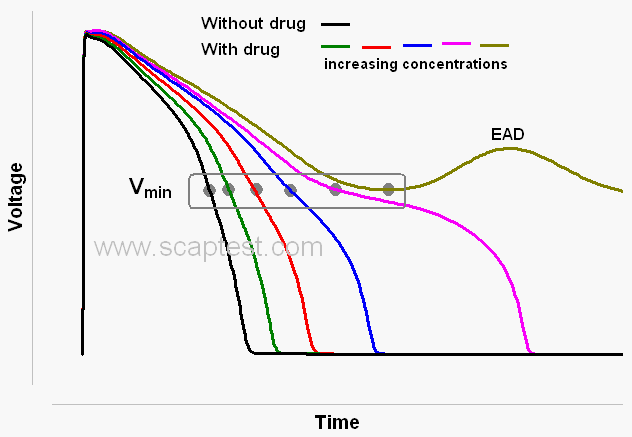
Minimal rate of AP decrease measured at EAD take off voltage (Vmin)
Vmin is calculated as the minimal rate of AP decrease measured at the EAD take off voltage.
In the presence of an EAD, Vmin is equal to zero.
In absence of EAD, Vmin represent the propensity of the compound to induce an EAD